What this simulator teaches you
Most people meet copy trading through a leaderboard full of green numbers. You press "Copy", put in some money and hope the person on the other side knows what they are doing. What the leaderboard rarely shows is how the experience feels: the stop-outs in a row, the trade you joined too late, the way leverage turns a calm chart into a liquidation. This simulator lets you live through all of that with virtual money first.
It is built around the same building blocks you will find on real exchange copy trading products: a leaderboard of lead traders with ROI, win rate and maximum drawdown; an allocation you set aside for each trader; a rule for sizing each copied trade; a leverage cap; a stop-copy loss limit; and a profit share that the trader takes from your gains. Change any of them and you will see the effect on your equity curve within minutes.
How to use it in five minutes
First time here? A short guided tour opens when you reach the simulator (or press ? How it works at any time). Nothing runs until you start it yourself: pick a balance, press Copy on a trader, set the sliders and press Start copying. The last ~25 hours of real price action then replay at ×10 and a result card appears in about 30 seconds.
- Load the marketThe simulator loads about three and a half days of recent 5-minute candles. The lead traders "trade" the first part to build their track record; the rest is replayed once you start copying.
- Read the leaderboard properlyDo not just sort by ROI. Look at max drawdown, the number of trades and the leverage each strategy uses. A 10x breakout strategy with a great ROI over a day is a very different animal from a 1x spot strategy.
- Copy with limitsPress Copy and choose how much of your virtual balance to allocate, how much margin each copied trade may use, your leverage cap and a stop-copy loss limit. The summary box tells you how far price has to move against you before a position is liquidated.
- Watch the mirrorNew trades by that strategy are copied into the positions table and marked on the chart. Closed trades show the exit reason — signal, take-profit, stop-loss, liquidation or stop-copy — and any profit share paid.
- Adjust and compareCopy a second strategy with a different style, try reverse copying, or lower your leverage cap and see how the equity curve changes. The risk coach comments on your setup as you go.
Meet the simulated lead traders
Real leaderboards are populated by people whose methods you cannot see. For learning, that is a problem: you cannot tell skill from luck. So every trader here is a transparent rule set. You always know why it bought or sold, which makes it much easier to connect the strategy, the market and the result.
| Trader | Style | Leverage | What to watch |
|---|---|---|---|
| Trend Rider | EMA 9/21 trend following, always in the market | 5x | Shines in clean trends, bleeds in sideways chop through repeated flips. |
| Mean Reverter | Buys RSI dips, sells RSI spikes | 3x | High win rate is common, but one strong trend can produce a large loss. |
| Breakout Hunter | 20-candle channel breakout | 10x | Many small stop-losses, occasional big winners. Leverage makes drawdowns sharp. |
| Steady Spot | Long-only above the 50 EMA | 1x | No liquidation risk and fewer trades. Sits in cash during downtrends. |
| Scalp Engine | Three-candle momentum bursts | 8x | Frequent trades mean fees matter a lot. A good lesson in hidden costs. |
Showing invented "human" profiles with fake histories would teach the wrong habit — trusting a number without understanding it. Transparent strategies let you see the cause behind every result, and that skill carries over when you study real lead traders on an exchange.
The settings, explained
Allocation
This is the slice of your balance that belongs to one copy relationship. On most exchanges it works the same way: the money moves into a copy sub-account or copy portfolio and is used only for that trader's mirrored trades. Keeping each allocation modest is the single easiest way to stop one bad trader from damaging your whole account.
Margin per copied trade
Here it is set as a percentage of the copy's current equity. At 20%, each new copied trade uses one fifth of the allocation as margin, so the trader can hold several positions without running out of funds. Real platforms offer similar choices, usually a fixed amount per trade or a ratio that scales with the lead trader's position size.
Leverage cap
If the lead trader uses 10x and you cap at 3x, your copied position uses 3x. Your profit per trade is smaller, but so is the chance of liquidation. The dialog shows the approximate adverse move that would liquidate a position at your chosen leverage — at 10x it is under 10%, which crypto can do in an afternoon.
Stop-copy loss limit
Once the copy's equity falls by this percentage of your allocation, the simulator closes everything and returns what is left to your balance. Many exchanges call this a total stop-loss or "stop copying when loss reaches". It is your circuit breaker.
Profit share
Lead traders on real platforms are usually paid a percentage of the profit they make for followers. The simulator uses a high-water mark, so you only pay on new net profit. Set it to 0% and 30% on the same strategy to see how much it changes your final result. For the full picture read our guide to profit sharing.
Reverse copy
Reverse copying opens the opposite side of every trade. People try it on traders who seem consistently wrong. The simulator lets you test the idea safely — and shows why it rarely works as neatly as it sounds, since fees and slippage apply to both directions. Our copy trading bot guide covers the concept in more depth.
What the numbers on screen mean
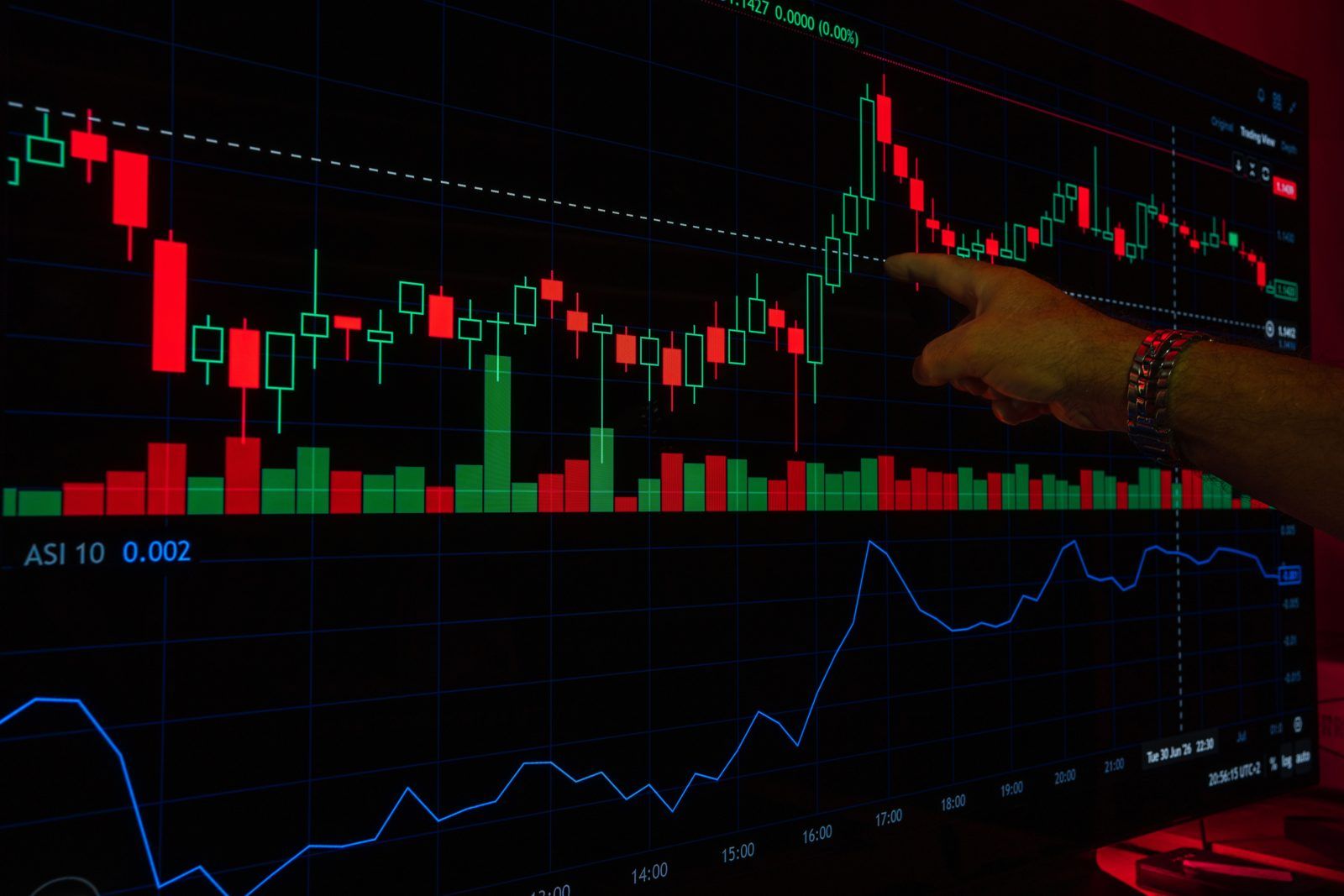
| Metric | Meaning | How to read it |
|---|---|---|
| ROI | Return on the strategy's own starting capital | Useful only next to drawdown and number of trades. |
| Win rate | Share of closed trades that made money | A 70% win rate can still lose money if losses are larger than wins. |
| Max DD | Largest peak-to-trough fall in equity | Ask yourself whether you could sit through it with real money. |
| Liq. | Approximate liquidation price of a copied position | The closer it is to the current price, the more fragile the trade. |
| uPnL | Unrealised profit or loss of an open position | Not yours until the position closes. |
Honest limitations
A simulator is a teaching tool, not a crystal ball. Keep these differences from live copy trading in mind:
- Execution is idealised. Copied trades fill at the strategy's price. On a real platform you often enter slightly later and at a worse price, especially in fast markets.
- Fees are simplified to a flat 0.05% per side. Real taker fees, funding rates on perpetual futures and spreads vary by exchange and account level.
- The time window is short. About a day of 5-minute candles says almost nothing about whether a strategy works over months.
- Liquidation is approximate. Real liquidation prices depend on margin mode, maintenance margin tiers and fees.
Trading with leverage carries a high risk of fast losses. In live markets a liquidated position loses its full margin. Practising here is a good idea; assuming live results will match the simulator is not.
From simulator to real account
Once you can explain why your equity curve looks the way it does, you are ready to read real leaderboards with a critical eye. Start with our guide to choosing a trader to copy, compare venues on the best copy trading platforms page, and put numbers on your plan with the copy trading calculator. When you move to a live account, begin with an amount you can afford to lose and the same limits you used here.
Frequently asked questions
Is the copy trading simulator free?
Yes. It runs in your browser with a virtual balance you choose yourself — from $100 up to $1,000,000 (default $10,000). There is no sign-up, no deposit and no real orders are ever sent anywhere.
Are the prices in the simulator real?
Yes, when the public market data feed is reachable. The simulator loads recent 5-minute candles and then follows the live price every few seconds. If that feed fails it switches to CoinGecko data, and if both are down it shows clearly labelled offline demo data.
Are the lead traders real people?
No. Each "lead trader" is a transparent, rule-based strategy (trend following, mean reversion, breakout, spot trend, scalping). Their rules are written on each card so you can see exactly why they trade. That makes the simulator honest: you are learning how copying works, not following anonymous profiles.
Why does copying not open a trade straight away?
Like most real copy trading platforms, the simulator only mirrors new trades opened after you start copying. If the trader is already in a position, you wait for the next entry.
How is profit share calculated here?
Profit share is charged only on new net profit above a high-water mark. In this demo it is settled each time a copied trade closes, while real platforms usually settle on a daily or periodic schedule. The principle — you do not pay twice for the same profit — is the same.
Does my progress save?
Your virtual balance, active copies and trade history are stored in your browser (localStorage). Clearing site data or using private mode resets them. You can also press Reset account at any time.